






A care worker wants to move into a more senior role. One provider calls the course NVQ Level 3 Health and Social Care. Another calls a similar route Level 3 Diploma in Adult Care. A third sells a classroom Health and Social Care course with a different purpose. The learner sees “fully online”, “no experience needed”, and “same across the UK”. No wonder people feel stuck.
This confuses learners because the search term is old, provider pages often blur different routes, and the UK does not use one single system everywhere. This guide clears that up. You will see what the qualification means now, who this route suits, how assessment works, what the CQC does and does not require, and how the answer changes across the UK.
TL;DR
- “NVQ Level 3 Health and Social Care” is still a common search term, yet in England the current adult social care route is usually called Level 3 Diploma in Adult Care.
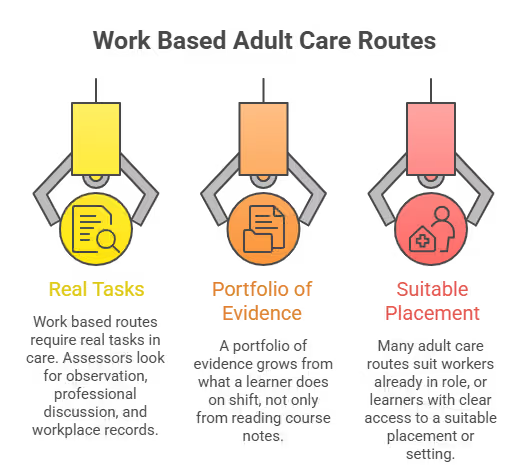
- This route is usually work based and competence based. Many learners need access to a real care setting because assessment often includes observation and a portfolio of evidence.
- This route is not the same as the Care Certificate. The Care Certificate sits at induction level for people new to care.
- The CQC does not say every worker must hold one exact Level 3 qualification. CQC focuses on enough suitably qualified, competent, skilled, and experienced staff, with proper support and training.
- England, Wales, Scotland, and Northern Ireland do not all use the same qualification names or registration rules.
Authority Clarification Section
NVQ Level 3 Health and Social Care is not one neat, current UK wide title. This topic sits across qualification language, workforce rules, provider marketing, and nation specific systems. In England, Skills for Care now lists Level 3 Diploma in Adult Care in the current qualification set. Awarding bodies such as City and Guilds and Pearson also use that England wording in current adult care materials.
This guide also needs a legal and regulatory line. CQC regulates services. CQC does not write one rule saying every adult social care worker must hold one exact Level 3 title. CQC’s staffing rule is broader. Providers must deploy enough suitably qualified, competent, skilled, and experienced staff, and staff must receive support, training, supervision, and development.
A second line sits outside England. Wales uses the current Core plus Practice framework for many registration routes. Scotland uses SVQ routes at SCQF level 7 for related adult social care roles. Northern Ireland is reviewing and redeveloping Level 3 Health and Social Care routes through its Care in Practice framework. That is why this article stays England led, yet UK aware.
What Is NVQ Level 3 Health and Social Care?
People often use “NVQ Level 3 Health and Social Care” as a catch all phrase for a Level 3 care qualification. In plain English, most searchers want to know about a route that proves skills, knowledge, and workplace competence in care.
The problem is simple. The phrase still lives in search, sales pages, and everyday speech, yet the exact route now depends on the role, the nation, and whether the course is work based adult care or a broader classroom Health and Social Care programme.
Why Do People Still Search For “NVQ Level 3”
Older qualification language stays in public use for years. Many providers still use “NVQ” because learners search for that phrase. Some web pages also use “NVQ” as a shortcut for any competence-based care diploma. That does not always match the current official title. This gap between search language and current qualification naming is one of the biggest causes of confusion.
What This Route Is Usually Called Now In England
In England, adult social care, the current route is usually framed as the Level 3 Diploma in Adult Care. Skills for Care lists that title in the current qualification set, and the current awarding body material uses the same wording. So when most England-based learners search “NVQ Level 3 Health and Social Care,” they are often looking for the adult care diploma route, even if they do not know the newer title yet.
Is This Still Called an NVQ, or Is This Now Something Else?
NVQ vs Diploma: What Learners Actually Need To Know
Use this simple rule. “NVQ” usually points to older or informal wording. “Diploma in Adult Care” is the safer current England wording for the live adult care route. A learner does not need to argue with the old term. A learner does need to check the exact qualification title, awarding body, and whether the route is work based adult care or a different Health and Social Care course. That small check prevents a lot of expensive mistakes.
Quick Table
Item | Details |
Search term people use | NVQ Level 3 Health and Social Care |
Current England adult care wording | Level 3 Diploma in Adult Care |
Main issue | Old search language versus current qualification title |
What to check | Exact title, awarding body, route type, care setting requirement |
Who Is This Level 3 Qualification For?
This route suits learners who work in adult care already, want to move into more responsibility, or want a recognised Level 3 route linked to frontline adult social care. Current Skills for Care and awarding body pages describe roles such as support worker, home care worker, residential care worker, healthcare assistant, and personal assistant. Some progression routes also link to lead adult care worker roles and other more complex support roles.
Best Fit For Existing Care Workers
This route often suits somebody already working in a care home, home care service, supported living service, day service, or another adult care setting. A worker in one of those roles may already deliver person centred care, record changes, follow safeguarding procedures, and work with more independence. A Level 3 diploma helps turn that daily practice into recognised evidence of competence.
Best Fit For New Learners Comparing Routes
A new learner still needs to pause before enrolling. A broad classroom Health and Social Care course may suit somebody aiming for college progression or wider study. A work-based adult care diploma usually suits somebody with access to real care practice. So this route is a strong fit for some beginners, yet not every beginner. The right route depends on work setting, career aim, and local qualification rules.
Do You Need to Be Working in Care Before You Start?
In many cases, yes. For the adult care diploma route, access to a real work setting is a major point because assessment usually relies on evidence from real practice. Current City and Guilds and Pearson material both describe the qualification as competence based and tied to adult care settings in England. That means many learners need real practice, not only theory study at home.
Work Based Adult Care Routes
Classroom Or Provider Led Alternatives
Not every Level 3 Health and Social Care course works like this. Some provider-led or college-based courses focus more on broad study, progression, or mixed classroom learning. A learner who is not working in care yet should ask a simple question before paying. “Does this route need workplace evidence in a real care setting?” If the answer is yes, a work setting matters. If the answer is no, the course may be a different type of Level 3 route with a different purpose.
Example
A learner who works in domiciliary care and wants a senior role often fits the adult care diploma route well. A school leaver who wants a wider classroom Health and Social Care course for later university study may fit a different route better.
How Is NVQ Level 3 Health and Social Care Assessed?
This route is usually competence-based, not exam-led. Assessment often draws on what a learner does in real care practice. Official qualification material points to internal assessment, a portfolio of evidence, and real work environment evidence for many parts of the route. That is a major reason why “fully online” provider claims need careful reading. Online study materials and remote support do not always mean the whole qualification happens away from the workplace.
What A Portfolio Of Evidence Usually Includes
A portfolio of evidence often includes several types of proof. Common examples include direct observation, written assignments, professional discussion, reflective accounts, witness testimony, and workplace documents linked to daily care tasks.
The aim is simple. The learner shows safe, consistent, person centred practice in real work. Pearson’s current specification also states that direct practice observation should happen in person in the real work environment for relevant unit content.
Flowchart
Start
↓
Work in a real adult care setting
↓
Carry out daily care tasks
↓
Collect evidence from practice
↓
Complete written work and professional discussion
↓
Build portfolio
↓
Assessor reviews competence
↓
Qualification awarded when all criteria are met
What Will You Learn at Level 3?
A strong Level 3 route covers more than one topic list. The best way to think about this qualification is as a blend of care knowledge, safe practice, and professional judgement. Current qualification material from Pearson shows mandatory themes such as duty of care, mental capacity and restrictive practice, health and wellbeing, equality, diversity, inclusion and human rights, health and safety, infection prevention and control, and continuous development. Skills for Care also frames the qualification around frontline care for vulnerable adults across home, day, residential, nursing, and related healthcare settings.
In practice, learners usually build strength in these areas.
- Safeguarding and protection.
- Person centred care.
- Communication and record keeping.
- Duty of care and professionalism.
- Health, safety, and infection prevention.
- Equality, dignity, and respect.
- Support for health and wellbeing.
- Ongoing development and reflective practice.
Optional units often vary. A learner may see themes linked to dementia, autism, sensory loss, neurodivergence, supervision, or other specialist care areas. That variation is normal. The main pattern stays the same. The route aims to build stronger, safer, more independent adult care practice.
Is This Qualification Required by Law or by the CQC?
No single short answer fits every service, employer, or nation. This qualification is not a blanket legal rule for every worker in every setting. CQC’s current staffing regulation does not name one exact Level 3 title for all adult social care staff. Instead, the rule focuses on enough suitably qualified, competent, skilled, and experienced staff, with proper support, training, supervision, and development. That is an important difference.
What Cqc Actually Expects In England
CQC expects providers to make sure staffing is safe and effective. That includes skill, training, support, supervision, and development. In other words, CQC looks at workforce competence and service safety. A Level 3 diploma may help show that a worker has suitable development and competence, yet CQC does not create a one size fits all legal rule saying every worker must hold this exact diploma.
Why “Required” Can Mean Different Things
A manager may say “required” because a service expects a certain level for progression. A provider may say “required” because a job advert prefers applicants with Level 3. A regulator may look at whether staff are skilled and trained enough. Those are not always the same thing. Outside England, registration systems add another layer. Wales, for example, links registration to its own qualification framework, not to England wording.
How Does This Differ Across England, Wales, Scotland, and Northern Ireland?
Table
Nation | Common Current Wording | Main Focus |
England | Level 3 Diploma in Adult Care | Adult social care qualification route |
Wales | Level 2 Core plus Practice, or Level 3 Practice in some routes | Qualification and registration framework through Social Care Wales |
Scotland | SVQ Social Services and Healthcare SCQF level 7, or related SVQ routes | Competence in job-related social care or integrated care roles |
Northern Ireland | Level 3 Diploma in Health and Social Care through the Evolving Care in Practice framework | Reviewed and redeveloped the sector route |
NVQ Level 3 vs Care Certificate vs Apprenticeship vs Classroom Health and Social Care Course
These routes are related, yet they are not interchangeable. Many weak provider pages blur them together. That leaves learners with the wrong course for the wrong goal.
Quick Table
Route | Best For | Setting | Main Outcome |
Care Certificate | People new to care | Induction in health and social care | Foundation knowledge, skills, and behaviours for new staff |
Level 3 Diploma In Adult Care | Adult care workers who need a work-based Level 3 route | Real adult care practice | Recognised competence-based qualification in England adult care |
Lead Adult Care Worker Apprenticeship | Learners on an apprenticeship pathway | Employed route with apprenticeship requirements | Apprenticeship plus Level 3 Diploma in Adult Care within that framework |
Classroom Health And Social Care Course | Learners seeking broader classroom study or different progression goals | College or provider-led study | Wider Health and Social Care learning, not always the same as the work-based adult care diploma |
Best Fit If Guide
- Level 3 Diploma in Adult Care: If you already work in adult care and want a recognised Level 3 route.
- Care Certificate: If you are new to care and starting induction.
- Apprenticeship: If you want an employed training route
- Health and Social Care course: If you want broader classroom study.
What Jobs and Progression Does Level 3 Support?
Level 3 often supports progression into more responsible adult care roles. Current adult care pages from City and Guilds point to roles such as support worker, home care worker, residential care worker, healthcare assistant, and personal assistant. Skills England’s lead adult care worker standard also points to progression into roles with more responsibility, including support and supervision of junior staff.
Common progression examples include:
- Senior care worker.
- Senior support worker.
- Lead adult care worker.
- Lead personal assistant.
- Team leader pathways with more experience.
- Next level development through Level 4 adult care routes.
This does not mean every learner moves into management straight away. Role outcomes still depend on employer, service type, nation, and experience. A Level 3 diploma is best seen as a strong development step. This route shows stronger responsibility, safer judgement, and more independent practice. Those are the features employers usually value most.
Common Mistakes People Make Before Enrolling
A lot of poor course choices start with a simple misunderstanding. These are the most common mistakes.
- Myth: Assuming “NVQ Level 3” is still the exact current title everywhere.
- Fact: In England adult care, the safer current wording is usually Level 3 Diploma in Adult Care.
- Myth: Assuming every Level 3 Health and Social Care course is the same.
- Fact: Some routes are work-based adult care qualifications. Others are wider classroom courses. Those serve different goals.
- Myth: Assuming online learning means no workplace evidence.
- Fact: Many adult care routes still rely on real work environment assessment and portfolio evidence.
- Myth: Assuming CQC requires this exact qualification for everyone.
- Fact: CQC focuses on safe staffing, competence, support, and training.
- Myth: Assuming the answer is the same across the UK.
- Fact: Wales, Scotland, and Northern Ireland use different live frameworks or qualification routes
- Myth: Assuming a provider’s entry rules apply everywhere.
- Fact: A provider may set its own admissions or study model. That does not make those rules universal.
What Should You Check Before Choosing a Provider or Course?
Before you enrol, check the exact qualification, not only the sales headline. This one habit cuts through most confusion. A learner or employer should check the official title, the awarding body, the route type, and whether assessment needs a real care setting.
Use this quick checklist.
- Exact qualification title: Does the provider list Level 3 Diploma in Adult Care, or a different Health and Social Care course.
- Awarding body: Look for a recognised awarding body and read the official qualification page where possible.
- Work based or classroom based: Does the route rely on real care practice and a portfolio, or is this a classroom style route.
- Care setting requirement: Do you need a job, placement, or workplace access for assessment.
- Delivery model: Online study support is useful. A learner still needs to check what happens in practice assessment.
- Support and timeline: Ask how assessor support works, how evidence is reviewed, and how long completion usually takes.
- Funding: In England, eligible adult social care employers may claim certain staff training costs through the LDSS for listed courses and qualifications. Some learners may also see loan or funded options depending on route and circumstances.
Final Summary
The main point is simple. Do not choose a route based on the search term alone. “NVQ Level 3 Health and Social Care” is still a popular phrase, yet the current England adult care route is usually framed as Level 3 Diploma in Adult Care. A strong choice depends on your role, your nation, and whether you have access to real care practice.
Before you pay for any course, check the exact qualification title, the awarding body, the delivery model, the care setting requirement, and whether the route matches your real job goal. That small bit of homework will save time, money, and confusion. For most readers, that is the best first step.
FAQ
Q: Is NVQ Level 3 Health and Social Care still the correct name?
A: This phrase still appears in search and provider pages, yet in England adult care the current route is usually called Level 3 Diploma in Adult Care. A learner should always check the exact title on the awarding body or official qualification page.
Q: Is this the same as the Level 3 Diploma in Adult Care?
A: Often, in England adult social care, this search phrase points to that route. Outside England, or in classroom Health and Social Care courses, the answer may differ.
Q: Do I need to be working in care before I start?
A: For many adult care competence based routes, a real care setting matters because assessment draws on workplace evidence. Some classroom routes work differently, so this point needs checking before enrolment.
Q: Is there an exam?
A: This route is usually competence based rather than exam led. Assessment often uses observation, professional discussion, written work, and a portfolio of evidence.
Q: Is this qualification required by law?
A: No single rule says every worker everywhere must hold this exact qualification. The legal and regulatory focus is on safe staffing, competence, training, and support.
Q: Does the CQC require this qualification?
A: CQC does not set one universal Level 3 title for all staff. CQC expects enough suitably qualified, competent, skilled, and experienced staff, with support, supervision, and development.
Q: Is this the same as the Care Certificate?
A: No. The Care Certificate is an induction standard for people new to care. A Level 3 adult care diploma is a higher, work-based qualification route.
Q: Can I complete this fully online?
A: Study support may be online, yet many adult care routes still rely on real-world environment evidence and assessment. A provider’s “online” claim should always be checked against the assessment model.
Q: Does this qualification apply the same way across the whole UK?
A: No. England, Wales, Scotland, and Northern Ireland use different live qualification language, frameworks, or registration routes. That is why nation-specific guidance matters.
Q: What should I choose if I am new to care and not employed yet?
A: A learner in that position should compare routes first. A Care Certificate or a classroom Health and Social Care route may fit better at the start, while a work based adult care diploma often suits somebody with access to real care practice.