
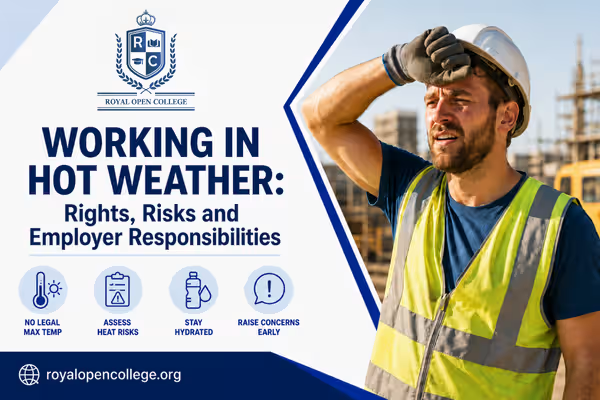


Working in hot weather can be tiring, uncomfortable and sometimes unsafe, especially if you work outdoors, wear PPE, do physical tasks, travel between visits, or support vulnerable people in health and social care. In the UK, there is no fixed legal maximum working temperature, but employers still have a responsibility to manage heat risks and keep working conditions reasonable for the role, workplace and people involved.
For workers, team leaders and managers who want to understand this topic more clearly, Royal Open College’s Heatwave: Health and Safety Tips course can support CPD learning around heat-related risks, hydration, risk awareness and practical workplace safety steps. It is not a regulated qualification or a replacement for employer risk assessments, but it can help build confidence when preparing for hot weather at work.
Quick recap
Is there a legal maximum temperature for working in the UK?
No. UK law does not set one maximum workplace temperature. That means employees are not automatically allowed to stop work just because the weather is hot.
But this does not give employers a free pass. Indoor workplace temperatures should be reasonable, and heat should be treated as a health and safety risk. What is reasonable depends on the job, setting, building, uniform, PPE, physical effort and who may be affected.
Why can hot weather be risky at work?
Heat Risk at Work: What It Affects
🥵 Heat can affect people quickly. A hot, stuffy workplace can cause:
⚠️ This matters because heat does not only affect comfort. It can also affect:
🤝 For health and social care staff, the risk can be even more sensitive. A care worker, nursing assistant or support worker may need to help people who are:
What should employers do in hot weather?
Employers should look at the real working conditions and reduce risks where possible. Simple steps can make a big difference.
This may include providing cool drinking water, improving airflow, using blinds, opening windows where safe, providing fans or cooling systems, moving work away from direct sunlight, allowing extra breaks, and adjusting duties during the hottest part of the day.
For outdoor workers, employers may need shaded rest areas, sun protection advice, cooler start times, more breaks and access to fresh water.
What rights do employees have if work feels too hot?
The best first step is to speak up early. Tell a manager, supervisor, HR team, union rep or health and safety representative what is happening.
Be specific. Say if there is no drinking water, poor airflow, unsafe PPE use, dizziness, faintness, heat rash, confusion, or a task that feels unsafe in the heat.
Employees should not assume they can simply walk out because it is hot. However, serious health and safety concerns should be taken seriously and reviewed quickly.
Who may need extra support?
Some workers may be more affected by heat than others. This can inculde:
Pregnant workers
Older staff
Disabled workers
People with heart or breathing conditions
Staff taking certain medication
People experiencing menopause symptoms
Support may include the following adjustments.
Extra breaks
Adjusted duties
Cooler work areas
Homeworking where suitable
Different shift times
An individual risk assessment
What should care settings think about?
Care homes, home care teams, supported living services, hospitals and community care teams should plan early. Hot weather can affect staff, service users, medicines, equipment, PPE, hydration, sleep, transport and safe staffing.
Managers should also think about Heat-Health Alerts, room temperatures, vulnerable residents, night shifts and how staff report heat-related concerns.
Common misunderstandings
The biggest misunderstanding is that “too hot to work” has one simple legal number. It does not.
Another mistake is thinking heat is only a comfort issue. In some roles, heat can become a safety issue very quickly.
A CPD course can help staff build awareness, but it is not a regulated qualification, licence to practise, legal certificate or compliance guarantee. Safe hot weather working still depends on employer policy, risk assessment, local procedures and sensible daily decisions.