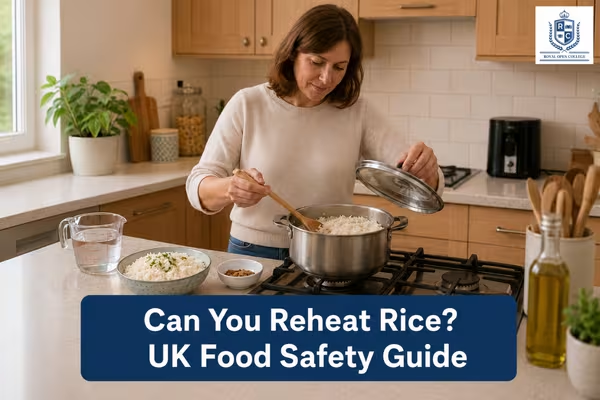
Can You Reheat Rice: UK Food Safety Guide

Can You Reheat Rice? UK Food Safety Guide

Learn whether you can reheat rice safely and why leftover rice is a genuine food poisoning risk. This guide covers Bacillus cereus, correct storage rules, safe reheating methods for the microwave, stovetop and oven, when to throw rice away, and what UK food safety guidance says about handling cooked rice correctly.

Yes, you can reheat rice safely. The key is getting two things right: refrigerate it within one hour of cooking and reheat it until it is steaming hot all the way through. The main risk is a bacterium called Bacillus cereus, which survives cooking as spores and produces toxins that no amount of reheating can destroy.

That is why how you handle rice after cooking matters just as much as how you reheat it. Leaving rice to cool slowly, storing it for more than one day, or reheating it more than once all increase the risk of food poisoning. Food handlers or catering professionals who want to understand the wider food safety principles behind this may find Royal Open College’s Food Hygiene and Safety Level 3 course a useful starting point for structured CPD learning.

Quick Recap

  • Cool rice within one hour of cooking and refrigerate straight away.
  • Reheat until steaming hot all the way through, never more than once.
  • Throw rice away if it sat out overnight or shows any signs of spoilage.

Why Is Reheating Rice a Food Safety Risk?

Rice can contain spores of a bacterium called Bacillus cereus. These spores are common in the environment and can survive the cooking process.

When cooked rice sits at room temperature, those spores can grow and produce toxins. High heat kills the bacteria but does not destroy the toxins they leave behind. This is a critical point that many people miss. You can reheat rice until it is piping hot and still become unwell if it was stored incorrectly in the first place.

It is also worth knowing that Bacillus cereus gives no warning signs. The rice looks normal, smells normal and tastes normal. You cannot tell by eye or by smell whether toxins are present. That is what makes correct storage so important every single time.

How Should You Store Leftover Rice?

Cool the rice as quickly as possible after cooking. The Food Standards Agency (FSA) advises cooling rice and putting it in the fridge within one hour of cooking. Do not leave it sitting on the counter to cool down slowly.

There are a few practical ways to speed up cooling at home. You can spread the rice out on a clean tray so the heat escapes faster. You can also divide it into smaller portions in separate containers. The goal is to get the rice out of the temperature danger zone, which the FSA sets between 8°C and 63°C, as quickly as you can.

Once it is cool, store it in a sealed container. Keep your fridge at 5°C or below. Use the rice within one day of cooking. Do not keep it for two or three days on the assumption that it still looks fine. One day is the safe limit.

Cooked rice can also be frozen. If you want to freeze it, cool it quickly first then portion it into smaller containers before putting it in the freezer. Defrost it in the fridge overnight and reheat it thoroughly before eating.

How Do You Reheat Rice Safely?

The rule is straightforward: reheat rice until it reaches a core temperature of 75°C throughout. The FSA is clear on this; no lukewarm patches should remain before you eat or serve it.

Microwave

30-second bursts
1

Put the rice in a microwave-safe bowl. Add one to two tablespoons of water to help create steam.

2

Cover the bowl with a plate or damp kitchen paper.

3

Heat in 30-second bursts and stir between each one.

4

Microwaves heat unevenly so stirring is not optional. Check the rice is piping hot before eating.

1

Put the rice in a pan and add a small splash of water or stock.

2

Cover with a tight-fitting lid and heat on a low to medium heat for around five minutes.

3

Stir occasionally and check the rice is hot all the way through before serving.

1

Spread the rice in an oven-safe dish and add a splash of water.

2

Cover tightly with foil. Heat at 180°C for around 20 minutes.

3

This method takes longer but heats the rice more evenly than a microwave.

4

Check it is hot throughout before serving.

Whichever method you use, the core temperature must reach 75°C before you eat or serve it.

75°C

Can You Reheat Rice More Than Once?

No. Reheat rice once and only once. Each time cooked rice cools down and sits again, the risk of bacterial growth increases. A second reheat does not make the rice safe.

If you cook a large batch, divide it into portions before storing. Only take out what you plan to eat in one sitting. Leave the rest sealed in the fridge. This avoids the temptation to reheat the same rice a second time and also reduces food waste.

When Should You Throw Rice Away?

Rice is not always unsafe because it looks or smells off. The real danger with Bacillus cereus is that it leaves no visible signs. That is exactly why the storage rules matter.

Throw rice away if any of these apply:

!

It sat out at room temperature for more than one hour after cooking.

!

It has been in the fridge for more than one day.

!

It smells sour or unusual.

!

The texture feels slimy or different from normal.

!

You are not sure how long it has been stored.

If in doubt, throw it out.

Food poisoning from Bacillus cereus causes two types of illness.

⏱ 1 to 6 hours

Vomiting type

The vomiting type can begin within one to six hours of eating contaminated food.

⏱ 8 to 16 hours

Diarrhoeal type

The diarrhoeal type tends to develop between eight and 16 hours later.

Both are avoidable with correct storage.

What Does This Mean for Food Handlers in the UK?

For anyone working in a UK food business, leftover rice is not just a home kitchen issue. It falls under food safety law and your employer’s food hygiene procedures.

The Food Safety Act 1990 places a legal duty on food businesses to ensure the food they sell or serve is safe. UK food hygiene regulations set out specific requirements around temperature control, safe storage and the prevention of contamination.

Under these rules, food businesses must apply HACCP (Hazard Analysis and Critical Control Points) principles. This is a structured approach to identifying food safety risks and putting controls in place to manage them. Cooked rice is a high-risk food that needs careful temperature control at every stage, from cooking through to cooling, storage and reheating.

Food handlers in catering, hospitality, care settings and food retail need to follow their employer’s procedures for handling leftover rice. This includes monitoring cooling times, checking fridge temperatures regularly and making sure food reaches the correct core temperature before service.

Environmental Health Officers inspect food businesses and check whether these controls are working. Poor practice around high-risk foods can lead to improvement notices or, in serious cases, closure.

If you work in a care setting, the stakes are higher. Older people, people with weakened immune systems and those living with certain health conditions are more vulnerable to food poisoning. Correct rice handling in a care kitchen is not just a legal requirement. It is part of keeping the people you support safe.

Does the Type of Rice Matter?

Does the Type of Rice Matter?

No. The food safety rules apply to all types of cooked rice. White rice, brown rice, basmati, jasmine, wild rice and sushi rice all carry the same Bacillus cereus risk once cooked. The variety makes no difference to how you store or reheat it.

The same principles apply to rice dishes. Egg fried rice, pilaf, rice salads and mixed rice dishes all need the same careful cooling, storage and reheating treatment as plain boiled rice.

Common Mistakes to Avoid

Most food poisoning cases linked to rice do not happen because someone reheated it. They happen because of what occurred in the hours between cooking and reheating. Rice is a high-risk food that needs careful handling at every stage, and the consequences of getting it wrong are the same whether you are cooking at home or working in a professional kitchen.

Poor rice handling can lead to Bacillus cereus food poisoning, which causes vomiting or diarrhoea and can be more serious for older people or those with weakened immune systems. The six mistakes below are common, easy to make and easy to avoid once you know what to look for. Some are particularly relevant for food handlers in catering, hospitality or care settings. None require complicated fixes. They simply require awareness and the habit of following the right steps every time.

Leaving rice to cool on the hob or counter

Once rice is cooked, it needs to move into the fridge within one hour. Rice left sitting at room temperature enters the temperature danger zone, where bacteria multiply quickly, and a cool kitchen does not change that. Ambient temperature is not a substitute for refrigeration.

Assuming the microwave makes it safe

A microwave can reheat rice safely, but only if it heats the rice evenly and thoroughly. Cold spots are a genuine risk. Stir the rice between bursts and check the temperature before eating or serving to confirm it has heated all the way through.

Reheating rice that was already reheated

If rice has already been reheated once, throw it away rather than heating it again. Appearance and smell are not reliable guides here. Harmful toxins produced by bacteria cannot be detected by sight or smell, so a second reheating is not worth the risk.

Storing rice in the fridge for several days

One day is the safe limit for refrigerated rice. Rice stored for two or three days carries a meaningfully higher risk, even when it looks and smells completely normal. Rice can appear perfectly fresh while still being unsafe.

Adding cold rice to a dish without thorough reheating

Cold rice added to a stir fry or fried rice dish still needs to reach 75°C throughout before it is safe to eat. A quick toss in a hot pan for a minute is not enough to guarantee that. The heat needs to reach the centre of the rice, not just the surface.

Not checking fridge temperature

A fridge running above 5°C gives bacteria a better chance of growing in stored rice. Check the temperature regularly and pay particular attention during warmer months, when fridges have to work harder to stay within a safe range.

Studying Through Royal Open College

For food handlers, supervisors and catering professionals who want to build a stronger understanding of food safety principles, Royal Open College offers a CPD-accredited Food Hygiene and Safety Level 3 course. It covers temperature control, contamination risks, HACCP principles and food safety management relevant to UK food businesses. CPD learning like this supports your professional development and helps reinforce good practice in the workplace. It is not a substitute for your employer’s food safety procedures or legal compliance requirements.

Recent Blogs

Safeguarding Training Renewal: How Often Should You Refresh

Safeguarding Training Renewal: How Often Should You Refresh?

Safeguarding training renewal depends on your role, setting, employer policy and local safeguarding procedure. This guide explains common 2 to 3 year refresher cycles, annual safeguarding updates, DSL renewal, care and healthcare expectations, certificate expiry, and the signs your training needs refreshing sooner than planned.

Who Can Be a Designated Safeguarding Lead in the UK

Who Can Be a Designated Safeguarding Lead in the UK?

A DSL is not chosen by certificate alone. This guide explains who is suitable to be a Designated Safeguarding Lead across UK schools, early years, charities, youth clubs, healthcare and care. It clarifies authority, training, deputy cover, employer appointment, UK nation differences and common myths such as Level 3 being required everywhere.

How Often Should Designated Safeguarding Lead Training Be Updated?

How Often Should Designated Safeguarding Lead Training Be Updated?

Many DSLs ask whether training is due every year or every 2 years. The answer depends on the difference between formal refresher training and annual safeguarding updates. This guide explains KCSIE expectations, Deputy DSL training, early years and healthcare caveats, Level 3 confusion, and evidence records.