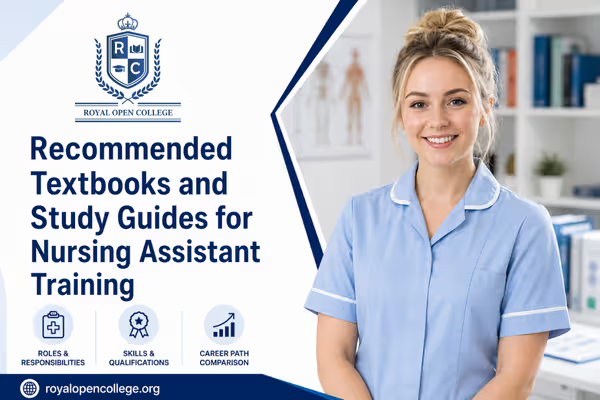


Finding the right textbooks and study guides for nursing assistant training can feel a bit overwhelming, especially when so many resources are written for different countries, exams, or nursing levels. For UK learners, the best starting point is to choose materials that match healthcare assistant, healthcare support worker, nursing support worker, and nursing associate-style learning.
A good study plan should help you understand safe care, communication, safeguarding, infection control, basic anatomy, dignity, and accurate record keeping. If you want structured CPD learning alongside your reading, Royal Open College’s Level 3 Diploma in Nursing Assistant Complete Training can support your knowledge in these areas, while employer induction, workplace supervision, and any role-specific requirements remain separate.
Quick recap
What are the best textbooks for nursing assistant training?
There is no single textbook every nursing assistant must use. The best book depends on your role, your experience and where you want to work.
Helpful options often include healthcare assistant books, clinical skills guides, anatomy and physiology texts, and nursing associate handbooks. Books such as Healthcare Support Workers: A Practical Guide for Training and Development, Clinical Skills for Healthcare Assistants and Assistant Practitioners, The Nursing Associate’s Handbook of Clinical Skills, and Ross & Wilson Anatomy and Physiology in Health and Illness are useful starting points.
If you are a complete beginner, start with simple care practice before jumping into advanced nursing texts.
Which UK resources should you use?
You should not rely only on random online PDFs or overseas exam guides. Trusted UK resources give better context.
The RCN has subject resources for healthcare assistants, nursing support workers, assistant practitioners and student nursing associates. NHS Knowledge and Library Services can also help learners access e-books, journals, clinical evidence and library tools, especially if they work or study in an NHS setting.
These resources are useful because they reflect UK language, UK roles and UK healthcare expectations more closely than general international study guides.
What should you study first?
Start with the care topics you will meet most often in real work.
Focus on these areas:
These areas matter in:
They also connect well with Care Certificate-style learning, although employers decide how training and competence are checked in each workplace.
Are US CNA study guides useful in the UK?
US CNA books can still help with basic care ideas. They often explain hygiene, mobility, safety, comfort and communication in a beginner-friendly way.
However, they may not match UK job titles, NHS practice, CQC expectations, safeguarding language, Care Certificate standards or employer policies. In the UK, you are more likely to see job titles such as Healthcare Assistant, Healthcare Support Worker, Nursing Assistant, Care Assistant, Nursing Auxiliary or HCA.
How do books, CPD courses and workplace training fit together?
Think of books as your foundation. They help you understand the “why” behind good care.
CPD courses give structure and help you revise key topics. Employer induction explains local rules. Workplace supervision checks whether you can carry out tasks safely in that setting.
This matters because care work is practical. Reading about infection control or moving and handling is helpful, but you must still follow your employer’s policy and receive the right workplace training.
Common misunderstandings
A textbook is not a qualification.
A CPD certificate is not a licence to practise.
A nursing associate book does not make someone a nursing associate.
Safest Approach
Build your knowledge step by step. Use these together:
That gives you a stronger, more realistic foundation for nursing assistant or healthcare support work.