


Diploma in Quickbooks Bookkeeping
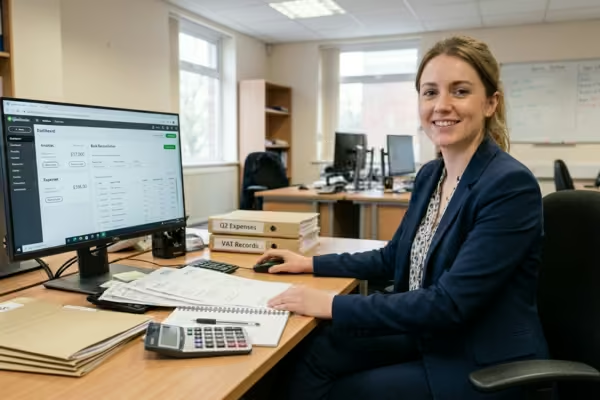
This CPD-accredited Diploma in QuickBooks Bookkeeping helps you learn how to manage real UK business accounts using QuickBooks. From invoices and expenses to VAT, payroll basics, bank reconciliation, and reporting, the course builds practical, job-ready bookkeeping skills for beginners, small business owners, and finance support roles.
Overview
What You’ll Learn
Overview
Confused by invoices, expenses, or VAT when looking at business accounts? This Diploma in QuickBooks Bookkeeping shows you how it all works step by step, using QuickBooks in real UK business tasks.
This course focuses on what bookkeepers actually do every day. You’ll learn how to create invoices, track expenses, handle VAT, understand payroll basics, reconcile bank accounts, and produce clear reports. Everything is explained in a simple way that makes sense. You’ll build skills you can use in real situations, like supporting finance work or managing your own business records.
You’ll also see QuickBooks used naturally as part of everyday workflows. The focus is on helping you stay accurate, organised, and confident with bookkeeping tasks. This quickbooks bookkeeping course gives you a clear path from setup to reporting. You’ll learn how cloud accounting works in real UK business settings, using simple steps that are easy to follow.
Key highlights:
- Learn QuickBooks from setup through to clear financial reporting
- Covers invoices, expenses, VAT, payroll basics, and reports
- Includes bank reconciliation and simple self-employed workflows
- 100% online with flexible, self-paced learning anytime
- CPD-accredited certificate offered after successful course completion
Why QuickBooks Bookkeeping Matters in the UK
QuickBooks skills are no longer just helpful. For many UK businesses and self-employed professionals, digital bookkeeping is becoming part of everyday tax and reporting workflows.
Across the UK, small businesses, sole traders, and landlords now use QuickBooks to manage invoices, track expenses, and prepare VAT returns. This move to digital record keeping helps keep financial data organised and reduces common errors.
Changes from HMRC are also driving this shift. Making Tax Digital for Income Tax will roll out from April 2026 for income over £50,000, then in 2027 for £30,000, and in 2028 for £20,000, requiring digital records and quarterly updates.
Accreditation & Recognition
This course offers CPD-accredited training designed to support practical bookkeeping skills and ongoing professional development. It focuses on helping you build real confidence using QuickBooks in everyday UK business tasks.
- CPD Accredited and industry recognised for CPD learning
- 100% online study with flexible, self-paced access
- Simple online assessment to support clear understanding
- Digital Certificate of Achievement offered after completion
- Supports professional development and practical bookkeeping confidence
Assessment & Certification
Learners complete the course through a simple online assessment and receive their certificate after successful completion. The process is clear and straightforward, with no hidden surprises or unnecessary steps.
Once you pass, you’ll be able to order a digital CPD-accredited certificate. The hardcopy version will be available for an additional price of £24.99 only. The certification process is designed to be simple and accessible, supporting your professional development without confusion or extra barriers.
Who Is This Course For?
This course is designed to support bookkeeping beginners and those moving into roles like accounts assistant or finance administrator. It also suits small business bookkeeping needs, especially for sole traders and self-employed users in the UK.
- Beginners learning bookkeeping software step by step clearly
- Aspiring bookkeepers and accounts assistants building practical skills
- Small business owners managing their own bookkeeping records
- Sole traders and self-employed professionals handling daily finances
- Admin staff moving into finance and bookkeeping support roles
- Learners building practical QuickBooks skills for UK workplaces
Career Opportunities & Progression
This course helps you build practical software confidence for bookkeeping support, accounts administration, finance assistant work, and managing your own business records using QuickBooks.
The course gives you a strong foundation for entry-level bookkeeping roles and ongoing professional development. In the UK, bookkeepers typically earn around £24,000 at entry level, with experienced roles reaching around £35,000, depending on skills and experience.
- Bookkeeper
- Accounts Assistant
- Finance Assistant
- Payroll Administrator
- Self-employed business owner managing their own books
Key Skills You’ll Gain
This course helps you build practical bookkeeping skills using QuickBooks, so you can handle everyday finance tasks with more confidence in real UK business and self-employed situations.
- Confident use of QuickBooks for everyday bookkeeping tasks
- Improved bookkeeping accuracy across financial records and entries
- Clear handling of invoices, expenses, and customer payments
- Better understanding of VAT and tax-related workflows
- Strong bank reconciliation skills for accurate financial tracking
- Basic payroll and wage-processing knowledge for business support
- Confidence creating and understanding key financial reports clearly
- Improved organisation and structured record keeping methods
- Stronger digital finance skills for modern business environments
Why Study with Royal Open College
Royal Open College helps you build practical, career-focused skills through flexible online learning. This QuickBooks course is designed to be clear, useful, and relevant to real UK bookkeeping tasks.
- CPD-accredited online learning designed for practical bookkeeping skills
- The training is focused on everyday business bookkeeping tasks
- Beginner-friendly structure with clear, step-by-step learning approach
- Flexible study that fits around work and daily life
- Strong UK focus including VAT, self-employed, digital workflows
Enrol today and build practical QuickBooks bookkeeping skills you can use in real business tasks, finance support roles, or your own business.
Curriculum Description
Module 01: QuickBooks Fundamentals
Learn how QuickBooks works and how it supports bookkeeping tasks in real UK businesses. This module introduces key features and helps you understand how financial data is organised within the system.
Module 02: Setting up the system
Understand how to set up QuickBooks correctly for a business from the start. You’ll learn how to enter business details and prepare the system for accurate bookkeeping workflows.
Module 03: Chart of Accounts with Lists
Learn how to build and manage a chart of accounts that supports clear financial tracking. This module shows how account structures help organise income, expenses, and financial records properly.
Module 04: Nominal ledger
Understand how the nominal ledger works within bookkeeping and how it links to transactions. You’ll learn how entries are recorded and how they support accurate financial reporting.
Module 05: Sales and Income Management
Learn how to record sales, create invoices, and manage customer payments. This module helps you track income clearly while supporting accurate bookkeeping and improving financial visibility.
Module 06: Purchases and Expenses
Understand how to record supplier bills and manage expenses within QuickBooks. You’ll learn how to keep purchase records organised and maintain accurate cost tracking.
Module 07: Sundry receipts
Learn how to record sundry receipts and handle small or irregular income entries. This module helps ensure all financial transactions are captured and included in your records.
Module 08: Sundry payments
Understand how to record sundry payments that do not fit standard categories. You’ll learn how to manage these entries properly to maintain complete and accurate bookkeeping records.
Module 09: Petty cash
Learn how to manage petty cash transactions and small daily expenses. This module shows how to track and record minor payments while keeping financial records accurate.
Module 10: Banking Operations
Explore how bank feeds work and how transactions flow into QuickBooks. You’ll learn how to review, match, and manage bank data for better financial control.
Module 11: Bank reconciliation
Learn how to perform bank reconciliation to match records with actual bank statements. This helps ensure accuracy and reduces errors in your bookkeeping workflow.
Module 12: VAT with Tax Management
Understand how VAT is recorded and managed within QuickBooks. This module helps you prepare VAT data and maintain organised records for tax-related bookkeeping tasks.
Module 13: Reporting Essentials
Learn how to generate financial reports such as profit and loss and balance sheet. You’ll understand how to read these reports and use them to review business performance.
Module 14: Payroll Management
Get an introduction to payroll processing and how wages are recorded in QuickBooks. This module builds awareness of payroll workflows within a bookkeeping context.
Module 15: Self-Employed Features
Explore features designed for self-employed users and small businesses. You’ll learn how QuickBooks supports simple workflows for managing income, expenses, and tax records.
Module 16: Inventory Management
Learn how to track inventory and manage stock within QuickBooks. This module shows how inventory links to sales, purchases, and overall financial records.
Module 17: Advanced Transactions
Understand more complex transactions and how they are recorded correctly. You’ll learn how to handle adjustments and ensure accuracy across financial records.
Module 18: Banking Automation
Explore automation features such as bank feeds and rule-based transaction matching. This helps improve efficiency and reduces manual work in bookkeeping tasks.
Module 19: Integrations with Apps
Learn how QuickBooks connects with other tools and applications. This module shows how integrations support smoother workflows and better data management.
Module 20: Business Management
Understand how financial data supports wider business decisions and cash flow management. You’ll learn how to use QuickBooks information to stay organised and plan effectively.
Module 21: Tasks
Learn how to manage routine bookkeeping tasks and maintain consistent workflows. This module helps you stay organised and ensures nothing is missed in daily financial management.
Curriculum
- 1 Section
- 23 Lessons
- Lifetime Access
- Diploma in Quickbooks Bookkeeping23
- 1.1Module 01: QuickBooks Fundamentals
- 1.2Module 02: Setting up the system
- 1.3Module 03: Chart of Accounts with Lists
- 1.4Module 04: Nominal ledger
- 1.5Module 05: Sales and Income Management
- 1.6Module 06: Purchases and Expenses
- 1.7Module 07: Sundry receipts
- 1.8Module 08: Sundry payments
- 1.9Module 09: Petty cash
- 1.10Module 10: Banking Operations
- 1.11Module 11: Bank reconciliation
- 1.12Module 12: VAT with Tax Management
- 1.13Module 13: Reporting Essentials
- 1.14Module 14: Payroll Management
- 1.15Module 15: Self-Employed Features
- 1.16Module 16: Inventory Management
- 1.17Module 17: Advanced Transactions
- 1.18Module 18: Banking Automation
- 1.19Module 19: Integrations with Apps
- 1.20Module 20: Business Management
- 1.21Module 21: Tasks
- 1.22Order Your Certificate!
- 1.23Leave a Review!