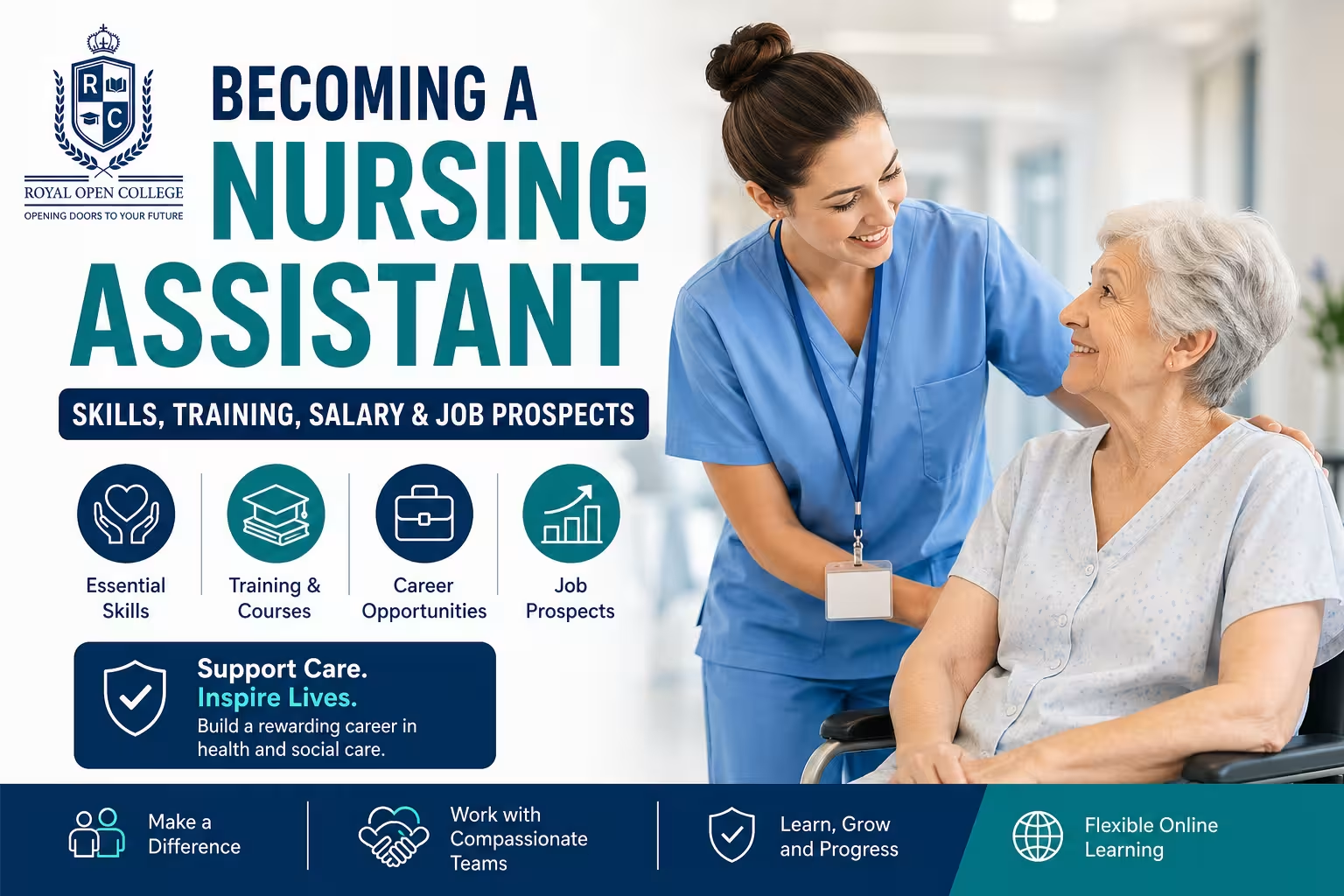
Many people start exploring healthcare by searching for “nursing assistant”. In the UK, similar roles often appear as Healthcare Assistant, Healthcare Support Worker, Clinical Support Worker or Nursing Support Worker. This guide explains the skills, training, salary and career routes clearly.
Becoming a nursing assistant can suit beginners, career changers and care workers who want a patient-facing role. You do not need to become a registered nurse first. You do need the right values, safe working habits and a clear view of what training can and cannot do.
Nursing Assistant: Skills, Training and Job Prospects at a Glance
A nursing assistant supports patients with daily care, comfort and safety. In the UK, this role often overlaps with Healthcare Assistant or Healthcare Support Worker roles, while Nursing Associate is a different regulated role.
- NHS England says there are no set entry requirements to become a Healthcare Support Worker. Personal skills and values matter most.
- “Certified Nursing Assistant” or “CNA” is common online, but it is not the usual UK job title.
- The Care Certificate was updated in March 2025. It now has 16 standards, including awareness of learning disability and autism.
- Online nursing assistant training can build knowledge and confidence.
- Online training does not replace employer induction, workplace assessment or supervised competence checks.
- NHS Band 2 and Band 3 pay gives useful salary context for many healthcare support roles.
What Is a Nursing Assistant in the UK?
A nursing assistant is a healthcare support worker who helps nurses and care teams support patients with daily care, comfort, communication and safety. In the UK, similar roles may be advertised as Healthcare Assistant or Healthcare Support Worker.
What job titles mean the same or similar thing?
Many learners search for “what is a nursing assistant” or “what is assistant nursing”. UK employers may use different job titles for similar support roles.
Common titles include:
- Healthcare Assistant
- Healthcare Support Worker
- Clinical Support Worker
- Nursing Support Worker
- Care Assistant
- Nursing auxiliary
- Auxiliary nurse
The exact duties depend on the employer and care setting. A hospital ward role may look different from a care home role. A community role may involve travel and home visits. NHS England uses Healthcare Support Worker as a common term and highlights compassion, teamwork and communication as important skills.
Is a Nursing Assistant the Same as a Healthcare Assistant or Nursing Associate?
A nursing assistant and healthcare assistant are often similar support roles, but a nursing associate is different. Nursing associates are regulated by the NMC and sit between health or care assistants and registered nurses.
Nursing Assistant vs Healthcare Assistant
In many UK job adverts, nursing assistant and healthcare assistant describe similar support work. Both roles may involve personal care, mobility support, observations where trained, communication and reporting concerns.
Always read the job description. Employers decide duties based on setting, supervision, training and workplace policy.
Nursing Assistant vs Nursing Associate
A Nursing Associate is not the same as a nursing assistant. The Nursing and Midwifery Council regulates nursing associates. The NMC says they bridge the gap between health and care assistants and registered nurses.
Nursing Assistant vs Registered Nurse
A registered nurse holds professional registration with the NMC. Nurses lead and deliver nursing care. Nursing assistants support care under supervision and within their role boundaries.
| Role | UK status | Typical function |
|---|---|---|
| Nursing Assistant, HCA or HCSW | Usually an unregistered support role | Supports daily care under supervision |
| Nursing Associate | NMC-regulated role in England | Bridges support work and registered nursing |
| Registered Nurse | NMC-regulated profession | Leads and delivers nursing care |
Is “Certified Nursing Assistant” or “CNA” the Right Term in the UK?
“Certified Nursing Assistant” or “CNA” is common in international search results, but it is not the usual UK job title. UK employers more often use Healthcare Assistant, Healthcare Support Worker or Nursing Support Worker.
Why do people search for CNA courses?
Search terms such as “certified nursing assistant certification”, “certified nurses assistant”, “cna certified nursing assistant”, “cna nursing course” and “cna online course” appear often because many websites use US wording.
UK learners may also search for:
- CNA nursing classes
- CNA training online
- CNA programs online
- Classes to be a CNA
- Certified nursing assistant classes online
- Licensed nurse assistant
- Licensed nursing assistant
These terms can help you find information. They should not be confused with the normal UK route into healthcare support work.
How should UK learners understand CNA wording?
A CNA course may describe theory linked to patient care. In the UK, similar entry-level jobs are more often called Healthcare Assistant, Healthcare Support Worker, Clinical Support Worker or Nursing Support Worker.
Use CNA terms for search clarity. Use UK job titles when applying for roles.
What Does a Nursing Assistant Do?
A nursing assistant supports patients with everyday care tasks, comfort, mobility, communication and safety. Duties can include personal care, nutrition support, basic observations, infection prevention and reporting concerns to nurses or senior staff.
Daily care duties
A nursing assistant may help patients with bathing, dressing, eating, drinking, toileting and grooming. These tasks need patience and respect.
Personal care must protect dignity and privacy. The role is not only practical. It also helps people feel safe and valued.
Clinical support tasks
Some nursing assistants help with observations such as temperature, pulse or blood pressure. They may support mobility, prepare rooms or help keep the care environment clean.
They should only carry out tasks they have been trained, assessed and authorised to do. The RCN states that healthcare support workers should act within the limits of their competence and follow workplace policies.
Reporting and communication
Nursing assistants spend time close to patients. They may notice changes in mood, pain, appetite, mobility or comfort.
They must report concerns to nurses or senior staff. Clear reporting helps the wider team respond early and keep care safe.
Can You Become a Nursing Assistant Without a Degree?
Yes, many people can start healthcare support roles without a university degree. Employers usually focus on values, communication, reliability, right-to-work checks, DBS suitability, training readiness and the ability to work safely with others.
What employers may look for
Employers often value compassion, patience, teamwork and good communication. They may ask for basic English and maths. They may also check references, work history and right to work.
NHS England says there are no set entry requirements to become a Healthcare Support Worker. It also says personal skills and values are vital.
When qualifications can help
A nursing assistant course can help beginners understand care language and workplace expectations. It can support interview preparation and confidence.
Training can help, but it should not be presented as a job guarantee. Employers still make recruitment decisions.
What Skills Do Nursing Assistants Need?
Nursing assistants need compassion, communication, observation, teamwork, patience and safe working habits. These skills help them support patients respectfully, notice changes, follow instructions and work well with nurses and wider care teams.
Compassion and empathy
Patients may feel anxious, tired or vulnerable. Compassion helps a nursing assistant give care with respect.
Empathy also supports trust. It helps workers see the person behind the task.
Communication and listening
Good communication helps patients understand what is happening. It also helps families and care teams share information.
A nursing assistant should listen carefully, speak clearly and ask for help when needed.
Observation and reporting
Small changes can matter in care. A patient may eat less, move differently or seem confused.
Nursing assistants should notice changes and report them to the right person. They should not diagnose.
Safeguarding awareness
Safeguarding means protecting people from abuse, neglect and harm. Nursing assistants must know how to raise concerns.
They should follow local policy and record concerns in the correct way.
Infection prevention and health and safety
Care work involves close contact. Infection prevention protects patients, staff and visitors.
Nursing assistants need safe hygiene habits. They may also learn about PPE, hand hygiene and clean care environments.
Resilience and professionalism
The role can involve pressure. Workers may support people during distress, pain or illness.
Professionalism means keeping boundaries, protecting confidentiality and staying reliable.
What Are the Main Nursing Assistant Job Requirements in the UK?
Nursing assistant job requirements vary by employer, but common expectations include the right to work in the UK, DBS checks, references, communication skills, safe working, care values and completion of workplace induction or training.
Right to work, DBS and references
Employers must check whether someone can work in the UK. They may also request a DBS check because healthcare support roles involve vulnerable people.
References help employers understand past conduct, reliability and suitability.
Literacy, numeracy and digital confidence
Nursing assistants may read care plans, follow instructions and record information. They may also use digital systems.
Basic literacy and numeracy help workers communicate safely. Digital confidence also matters in modern care settings.
Physical and emotional readiness
The role can involve standing, walking and helping with mobility. It can also involve emotional moments.
Workers need to stay calm, ask for help and follow safe moving and handling guidance.
Employer induction and workplace training
New staff usually complete induction. This may include local policies, safeguarding, infection prevention, health and safety and role-specific tasks.
Employers decide what training and supervised practice are needed for each role.
What Training Do You Need to Become a Nursing Assistant?
You do not always need a formal qualification before applying, but training can help you understand patient care, safeguarding, communication, infection prevention and professional responsibilities before starting a healthcare assistant or support worker role.
Employer induction
Employer induction teaches staff how to work safely in that organisation. It covers local policies and procedures.
This matters because every setting is different. A hospital, care home and home care provider may use different systems.
Care Certificate knowledge
The Care Certificate sets out key standards for health and social care workers. It supports induction for people new to care.
It is not the same as an online course alone. Workers need assessment of knowledge and practice in the workplace.
CPD nursing assistant courses
A CPD nursing assistant course can build knowledge before applying for care roles. It may cover patient care, safeguarding, infection control, communication and dignity.
CPD means continuing professional development. It supports learning but does not replace employer sign-off.
Level 2 Adult Social Care Certificate
The Level 2 Adult Social Care Certificate is a regulated qualification for adult social care. Skills for Care says it is Ofqual-regulated and requires observational assessment. It usually takes a new learner around 6 to 8 months.
This is different from a short CPD course.
What Changed in the Care Certificate in 2025?
The Care Certificate standards were updated in March 2025. There are now 16 standards, with a new standard covering awareness of learning disability and autism, so older content mentioning only 15 standards is outdated.
What are the 16 standards?
The updated Care Certificate includes standards on duty of care, person-centred care, communication, privacy and dignity, fluids and nutrition, safeguarding adults, safeguarding children, basic life support, health and safety, handling information and infection prevention.
The new Standard 16 covers awareness of learning disability and autism. Skills for Care confirms the update and states that the standards were developed with NHS England and Skills for Health.
Can the Care Certificate be completed fully online?
Online learning can support the knowledge part. It cannot fully confirm workplace competence by itself.
A worker must show what they know and what they can do in practice. This usually needs employer assessment in the workplace.
What Should a Nursing Assistant Course Cover?
A good nursing assistant course should cover patient care, communication, safeguarding, infection prevention, dignity, privacy, mobility, nutrition, health and safety, record keeping and professional responsibilities in health and social care settings.
Core patient care topics
A course should explain personal care, hygiene, mobility support, nutrition and hydration. It should also cover comfort and emotional support.
These topics help learners understand daily care before entering a workplace.
Safety and professional topics
Useful training should cover safeguarding, infection prevention, health and safety, confidentiality and record keeping.
These topics protect patients and staff. They also help learners understand professional behaviour.
Career preparation topics
A strong course should help learners understand teamwork, care values and role boundaries. It can also support interview preparation.
It should avoid promising jobs or automatic clinical competence.
Can You Study a Nursing Assistant Course Online?
Yes, you can study the theory of nursing assistant training online. An online nurse assistant course can help you learn care principles, but practical competence still depends on employer training, supervision and workplace assessment.
What online training is useful for
Online training can introduce common care terms and duties. It can help you learn about dignity, communication, safeguarding and infection prevention.
It can also help you prepare examples for job applications and interviews.
What online training cannot replace
Online training cannot replace employer induction. It cannot replace supervised practice or practical competence checks.
It also cannot make you a registered nurse or nursing associate. Those roles have formal professional routes and requirements.
What Can Online Nursing Assistant Training Do and What Can’t It Do?
Online nursing assistant training can build knowledge and confidence, but it cannot automatically guarantee a job, replace workplace induction, authorise clinical tasks or make someone a registered nurse, nursing associate or fully signed-off Care Certificate holder.
Online training can help you
| Online training can help with | Why it matters |
|---|---|
| Patient care knowledge | Builds confidence before applying |
| Safeguarding awareness | Helps learners understand reporting duties |
| Infection prevention | Supports safer care habits |
| Communication | Helps with patients and teams |
| Interview preparation | Gives examples for applications |
Online training cannot automatically do
| Online training cannot automatically | Why |
|---|---|
| Guarantee NHS employment | Employers decide recruitment |
| Sign off workplace competence | Assessment must happen in practice |
| Replace induction | Employers train staff to local policy |
| Authorise clinical duties | Duties need training and supervision |
| Make you a Nursing Associate | Nursing Associate is NMC-regulated |
How Do You Become a Nursing Assistant in the UK Step by Step?
To become a nursing assistant in the UK, learn the role titles, check employer requirements, build care knowledge, prepare your CV, complete checks, apply for support roles and complete workplace induction after being hired.
Step 1: Understand the UK job titles
Search for nursing assistant, Healthcare Assistant, Healthcare Support Worker, Clinical Support Worker and Nursing Support Worker.
These titles may lead to similar entry-level care roles.
Step 2: Check local job adverts
Look at NHS Jobs, care homes, private hospitals and community care providers.
Read the duties and person specification. This shows what each employer expects.
Step 3: Build care knowledge
Study core topics such as patient care, safeguarding, communication, infection prevention and dignity.
A nursing assistant course can support this stage.
Step 4: Prepare your CV and examples
Show transferable skills from retail, childcare, hospitality, volunteering or family care.
Use examples that show compassion, teamwork and reliability.
Step 5: Complete checks
You may need proof of identity, right to work, references, DBS checks and health checks.
The employer will explain what applies.
Step 6: Start employer induction
After hiring, complete induction and local training.
This helps you understand policies, systems and safe practice.
Step 7: Keep developing
Continue learning through the Care Certificate, CPD and workplace experience.
Over time, you may progress into senior support or formal nursing routes.
Where Can Nursing Assistants Work?
Nursing assistants can work in hospitals, care homes, nursing homes, community care, hospices, rehabilitation units, mental health services, private healthcare and people’s own homes, depending on the employer and job description.
NHS and hospital settings
Hospital roles may include wards, outpatient areas, rehabilitation units, theatres or mental health services.
Nursing assistants work as part of a wider team. They support nurses and other professionals.
Social care and community settings
Social care roles may include residential care, nursing homes, domiciliary care and supported living.
These roles often involve person-centred support with daily living.
Private healthcare settings
Private hospitals, clinics and specialist services also employ support workers.
Duties vary by employer and service type.
What Is the Nursing Assistant UK Salary?
Nursing assistant salary in the UK depends on employer, location, shift pattern, duties and experience. NHS support roles often sit around Band 2 or Band 3, while private and social care pay varies.
NHS Band 2 and Band 3 salary context
NHS Employers lists 2026/27 Agenda for Change pay scales from 1 April 2026. Band 2 is £25,272. Band 3 starts at £25,760 and rises to £27,476.
These figures give useful context for many healthcare support roles.
Why private-sector salaries vary
Private hospitals, care homes and community providers may use different pay structures. Pay can change by region, shift pattern and responsibility level.
Weekend, night or bank work may affect earnings.
How progression can affect salary
Experience can support progression into senior healthcare assistant, assistant practitioner, nursing associate or registered nurse routes.
Further training and employer support often affect progression.
Are Nursing Assistants in Demand in the UK?
Nursing assistants and healthcare support workers remain important across hospitals, care homes and community services. Demand is shaped by workforce needs, local vacancies, population ageing, social care pressures and employer recruitment plans.
NHS and healthcare support roles
Healthcare Support Workers play a key role in NHS services. NHS England describes them as part of hands-on care environments where teamwork, communication and problem-solving matter.
Local demand still varies. Always check current vacancies in your area.
Adult social care career structure
Adult social care also offers entry routes and progression. The Care Workforce Pathway launched in January 2024 and was expanded to eight role categories in April 2025. It aims to support clearer career development in care.
Avoid exaggerated demand claims
A nursing assistant course should not promise guaranteed employment.
A fair article should explain opportunity, but it should also explain recruitment checks, local vacancies and employer choice.
What Career Progression Can a Nursing Assistant Have?
A nursing assistant role can be a starting point for senior care, healthcare support, assistant practitioner, nursing associate or registered nurse pathways. Progression depends on experience, employer support, further training and formal qualification routes.
Senior healthcare support roles
With experience, a nursing assistant may move into a senior healthcare assistant or senior nursing assistant role.
These roles may include mentoring new staff or taking extra responsibility.
Specialist support routes
Some workers develop in dementia care, mental health, rehabilitation, theatres, palliative care or community care.
Specialist routes often need extra training and workplace experience.
Nursing Associate and registered nurse routes
Some healthcare support workers progress towards Nursing Associate roles or registered nursing.
The NMC regulates nursing associates and describes them as bridging health and care assistants with registered nurses.
What Are the Challenges and Rewards of Being a Nursing Assistant?
Being a nursing assistant can be physically active and emotionally demanding, but it can also be meaningful. The role gives people a chance to support patients directly and build real healthcare experience.
Common challenges
The role may involve active shifts, personal care and emotional pressure. Workers may support people who feel distressed or unwell.
Time pressure can also occur. Safe practice and teamwork help manage this.
Key rewards
The role can give strong personal satisfaction. Nursing assistants often see the direct effect of their support.
It can also build confidence for future healthcare careers.
How Can You Improve Your Chance of Getting a Nursing Assistant Job?
You can improve your chance by understanding the role, preparing a care-focused CV, learning key care topics, practising interview examples, showing strong values and applying to suitable NHS, private healthcare and care-sector roles.
Build a care-focused CV
Show skills that match care work. Useful examples can come from retail, hospitality, childcare, volunteering or family care.
Focus on reliability, communication, empathy and teamwork.
Prepare interview examples
Employers may ask about dignity, safeguarding, conflict, teamwork or pressure.
Prepare short examples that show how you listened, acted safely and asked for help.
Take relevant training before applying
Training can show motivation. Useful topics include safeguarding, infection prevention, health and safety, communication and person-centred care.
A nursing assistant course can help you prepare with more confidence.
How Can Royal Open College Help You Prepare?
Royal Open College can help learners build care knowledge through flexible online training in patient care, safeguarding, infection prevention, communication, dignity and professional responsibilities before applying for healthcare support or nursing assistant roles.
Who the course is suitable for
Royal Open College training can suit beginners, career changers and existing care workers.
It can also support learners who plan to apply for healthcare assistant or healthcare support worker roles.
What learners can build
Learners can build confidence, care vocabulary and knowledge of key care duties.
They can also prepare for interviews and understand what employers may expect.
Compliance-safe course guidance
Royal Open College’s online Nursing Assistant training supports knowledge development and career preparation.
Employer induction, workplace competence sign-off and clinical task approval remain the responsibility of the hiring organisation.
FAQs About Becoming a Nursing Assistant
What is a nursing assistant?
A nursing assistant supports nurses and care teams with patient care. The role may include personal care, mobility support, comfort, communication and reporting concerns. In the UK, similar roles may appear as Healthcare Assistant, Healthcare Support Worker or Nursing Support Worker. The exact duties depend on the employer and setting.
Is a nursing assistant the same as a healthcare assistant?
A nursing assistant and healthcare assistant are often similar in UK job-search language. Both usually describe support roles that help patients with daily care and comfort. The job title can change between employers. Always check the job description because duties, training and supervision can vary between hospitals, care homes and community services.
Is a certified nursing assistant the same as a UK healthcare assistant?
No, “certified nursing assistant” or “CNA” is not the usual UK job title. It appears often on international websites. UK employers usually use titles such as Healthcare Assistant, Healthcare Support Worker, Clinical Support Worker or Nursing Support Worker. CNA searches can still help learners find general care training information.
Can I take a nursing assistant course online?
Yes, you can study nursing assistant theory online. An online nurse assistant course can teach patient care, safeguarding, infection prevention, communication and dignity. It can help you prepare for applications. It does not replace employer induction, supervised practice, workplace assessment or role-specific clinical training.
Are CNA online courses recognised in the UK?
CNA online courses may support knowledge, but the CNA title is not the usual UK healthcare support title. Recognition depends on the course provider, accreditation and employer view. UK employers usually focus on role requirements, values, checks, induction and workplace competence. Check each job advert before relying on any course.
What are the main nursing assistant job requirements?
Common nursing assistant job requirements include care values, communication, reliability and safe working. Employers may also require right-to-work checks, DBS checks, references and occupational health checks. Some roles ask for English, maths or care experience. Many employers provide induction and role-specific training after hiring.
What is the nursing assistant UK salary?
Nursing assistant UK salary depends on employer, setting, region, duties and experience. NHS support roles often sit around Band 2 or Band 3. NHS Employers lists 2026/27 Band 2 at £25,272 and Band 3 from £25,760 to £27,476. Private and social care pay can differ.
Do I need nursing assistant classes or nurse aide classes to work in the UK?
You do not always need nursing assistant classes before applying for UK support roles. NHS England says there are no set entry requirements for Healthcare Support Worker roles. Training can still help you understand care duties and prepare for interviews. Employers decide what training and checks they require.
Is a nursing assistant course the same as the Care Certificate?
No, a nursing assistant course is not the same as the Care Certificate. A course can support knowledge. The Care Certificate involves standards that workers must meet in practice. Skills for Care confirms the Care Certificate now has 16 standards after the March 2025 update.
Can a nursing assistant become a nurse?
Yes, a nursing assistant can work towards becoming a registered nurse through further study and approved routes. Experience in care can help build confidence and understanding. It does not replace nursing education or NMC registration. Learners may also consider Nursing Associate routes as part of career progression.
What is the difference between a nursing assistant and a nursing associate?
A nursing assistant is usually an unregistered support role. A Nursing Associate is a regulated role in England. The NMC says nursing associates bridge the gap between health and care assistants and registered nurses. Nursing Associate training and registration requirements are different from nursing assistant training.
Can I become a nursing assistant without GCSEs?
You may be able to apply without GCSEs because entry requirements vary. NHS England says there are no set entry requirements for Healthcare Support Worker roles. Some employers may still ask for English and maths or equivalent skills. Read the job advert and show strong communication, values and willingness to learn.
What does a nursing assistant do on a normal shift?
A nursing assistant may help with personal care, meals, mobility, comfort and basic observations where trained. They may also report changes to nurses and support a clean care environment. The shift depends on the setting. A hospital ward role can differ from a care home or community role.
Is a nursing assistant a good career choice?
A nursing assistant role can be a good choice for people who want hands-on care work. It suits people who value compassion, teamwork and patient support. The role can be demanding, but it offers useful experience. It can also support progression into senior care or formal nursing routes.
Can I work as a nursing assistant in the NHS?
Yes, you can apply for NHS support roles when vacancies match your skills and circumstances. Search for Healthcare Assistant, Healthcare Support Worker, Clinical Support Worker and Nursing Support Worker. NHS employers will explain the checks, induction and training required. Training can help you prepare, but it cannot guarantee employment.
What is the difference between a nursing assistant and a care assistant?
A nursing assistant often works in healthcare settings, while a care assistant often works in social care. Duties can overlap. Both roles may support personal care, dignity, mobility and communication. The main difference comes from employer setting, job description, supervision and the level of healthcare involvement.
Do nursing assistants take blood pressure?
Some nursing assistants may take blood pressure if their employer trains, assesses and authorises them to do it. They should not carry out clinical tasks without permission and competence. Role boundaries matter because patient safety depends on training, supervision and local policy.
Do nursing assistants need safeguarding training?
Yes, safeguarding awareness is important in healthcare and social care roles. Nursing assistants may work with vulnerable adults, children or people with complex needs. They need to know how to recognise concerns and report them. Employers usually provide safeguarding training and explain local reporting procedures.
Can a nursing assistant give medication?
A nursing assistant should only support or handle medication if trained, assessed and authorised by the employer. Medication duties depend on workplace policy and role level. Some support workers may assist in limited ways. Others may have no medication duties. Always follow local policy and supervision.
How long does it take to become a nursing assistant online?
Online learning time depends on the course and learner pace. Some courses cover theory over days or weeks. That does not mean the learner is fully workplace competent. Practical readiness depends on employer induction, supervision, assessment and experience in a real care setting.