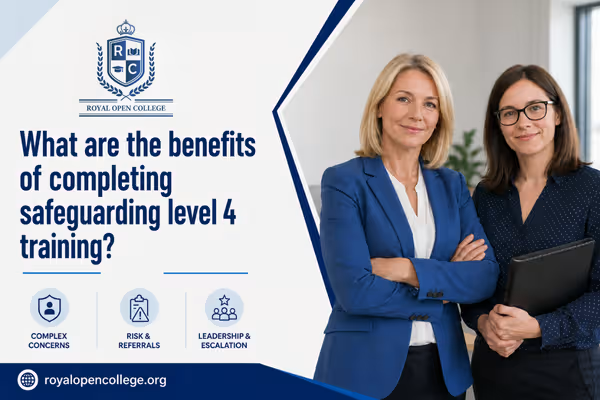


What are the benefits of completing safeguarding level 4 training?

What are the benefits of completing safeguarding level 4 training?

Safeguarding Level 4 training can help senior staff, managers and safeguarding leads feel more confident with complex concerns, referrals, record keeping, escalation and multi-agency working.

Safeguarding Level 4 training is useful when your role goes beyond basic awareness. If you support complex concerns, guide staff, or help make safeguarding decisions, this training can give you more confidence. It helps you understand not just what to report, but how to assess, record, escalate and work with others safely.

For structured CPD learning, Royal Open College’s Safeguarding Level 4 course supports knowledge of complex safeguarding concerns, risk assessment, disclosures, referrals, record keeping and multi-agency working. It does not replace employer-led training, local procedures, workplace sign-off or any regulated qualification your role may require.

Quick recap

  • It is useful for safeguarding leads, managers and senior staff.
  • It can improve confidence with risk, referrals, records and escalation.
  • The right training depends on your role, setting, employer policy and local procedures.

Why do people complete safeguarding Level 4 training?

Most people search for Level 4 training because they already have safeguarding responsibility, or they are moving towards it. They may be a Designated Safeguarding Lead, care manager, senior support worker, nurse, teacher, social worker, family support worker or safeguarding officer.

The real benefit is not just having a certificate. It is feeling more prepared when a concern is serious, unclear or difficult to handle. In safeguarding, people often worry about missing a sign, delaying a referral or not recording enough detail. Good training helps reduce that uncertainty.

How does it help with complex concerns?

Basic safeguarding training

Basic safeguarding training may teach you how to recognise abuse and report concerns.

Level 4 usually goes deeper.

It looks at :

risk factors disclosure information sharing mental capacity domestic abuse exploitation neglect multi-agency working

Real safeguarding concerns are not always simple.

A person may deny abuse.

A child may show behaviour changes but say nothing.

An adult may have care and support needs but still have the right to make choices.

Level 4 training helps you slow down, ask better questions and follow the right process.

How can it support leadership?

If other staff come to you for advice, Level 4 training can be helpful. It can support you in guiding colleagues, checking records, challenging unsafe practice and knowing when to escalate.

It also helps with safeguarding culture. A safer workplace is not built only by policies. It is built by people who notice concerns, listen properly, record clearly and act without delay.

Does it support UK workplace expectations?

It can support them, but it should not be oversold. In UK care, education and health settings, safeguarding training expectations depend on the role, workplace, regulator, employer policy and local safeguarding arrangements.

For example, CQC expects safeguarding training to be relevant to a worker’s role in regulated care settings.

Schools and colleges follow safeguarding duties under Keeping Children Safe in Education.

Your employer decides what evidence is suitable for your job.

What does safeguarding Level 4 training not guarantee?

This is where many people get confused. CPD Level 4 training is not automatically a regulated qualification. It is not a licence to practise. It does not guarantee a job, promotion, CQC compliance, DSL appointment or acceptance by every employer.

It can support your knowledge and confidence, but workplace competence also depends on experience, supervision, local procedures and how you apply the learning in real situations.

Is safeguarding Level 4 training worth it?

It can be worth it if your role involves safeguarding decisions, referrals, supervision, leadership or complex concerns. If people rely on you for safeguarding judgement, Level 4 training can be a practical step towards safer, calmer and more confident practice.

Recent Blogs

Where can I find safeguarding level 3 training courses?

Where can I find safeguarding level 3 training courses?

You can find safeguarding Level 3 training through NHS routes, local safeguarding partnerships, employer portals and online CPD providers. The right course depends on your role, setting, employer policy and local safeguarding procedures.

What job roles require safeguarding level 4 training

What job roles require safeguarding level 4 training?

Safeguarding Level 4 training is usually for senior, named, lead or specialist roles. It may apply to people who manage complex concerns, advise staff, supervise safeguarding practice, or work with external agencies.